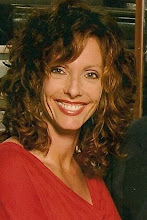
A lot of people attempt suicide. In fact, someone commits suicide every 17 minutes in the US. A male is 4 times more likely to succeed than a female. What a thing to be better at! Poisoning is the 2nd most successful method overall, but is by far the method of choice for women.
Many people who use poison, get their stomachs pumped and go back to trying to cope and putting their lives back together with little lasting evidence. Because too much time had elapsed from when I took the pills from the time I got to the hospital, my stomach was not pumped. Over 90 pills - mostly brain drugs: sleeping pills, tranquilizers, antidepressants (ironic, huh?), some Tylenol, extra strength mind you, and other assorted chemicals went all the way through my system.
At the hospital, at some point, they quit even monitoring me so I am told. My fever went over 107, and my mother had to literally pitch a fit to get me a cooling blanket. (Eternally grateful, Mom) I was on a respirator. My heart stopped three times, and I had seizures for hours. I know that if I had not been in such good physical shape, I would not have survived. My Mother actually witnessed staff going back and filling in my medical charts.
I was seething mad about this for a long time. Yes, I had tried to kill myself. I was messed up but, once I got to the hospital, they had a responsibility to do everything to help me and, at the very least, do their jobs. There was a time when I wanted vengeance and to sue the crap outta that hospital.
In the past couple of years instead of pursuing a lawsuit I have chosen to put my energy into getting better and healing. Even if I did sue and win, would it really change anything? I'd have more money, but I'd still talk funny. I would have expended my resources towards something negative instead of bettering myself and my situation.
I have come to have compassion for the nurses and doctors on duty that night. It was a full moon and a busy ER. Gurneys lined the hallways. I choose to believe that the hospital personnel had finite resources and thought I was going to die. Therefore, they made the logical and understandable decision to put their efforts into people who had better odds. I can only imagine the "holy shit!" look on their faces when they realized I was going to pull through.
I have found that you can take any situation and put some distance between yourself and it emotionally and look at it objectively. I didn't say this was easy. It takes some effort and practice, but it can be done.
Over time, with repetition, because of neuroplasticity, this actually becomes the default in your brain. However, you do have to consciously make a disciplined effort at first. Reinforcing these pathways and activating this loop in your brain permanently rewires your brain.
Byron Katie has a process she calls The Work that teaches you exactly how to do this. You can take any situation and stop your struggling and anguish. According to Katie and many philosophies, all suffering is caused by our own thoughts and judgments about what happens, not by what actually happens. The goal is to change your thoughts. The Work consists of four questions and a turn around. The questions are:
- Is it true?
- Can you absolutely know that it's true?
- How do you react, what happens, when you believe that thought?
- Who would you be without the thought?
After you've analyzed your situation with the four questions, you turn it around. Each turn around is an opportunity to experience the opposite of your original statement and see what you and the person you've judged have in common. She says the turnarounds are the prescriptions for happiness. For example:
"The hospital workers should have done more to help me" turns around to:
- The hospital workers should not have done more to help me. They had to make a judgment call here.
- I should have done more to help myself before ever getting to the hospital.
This exercise can help to alleviate your anger and suffering about any situation and give you a new perspective. You can find a full explanation of The Work and even worksheets at http://www.thework.com. Give it a try about some situation in your life and turn it around.
Friday, April 30, 2010


Saturday, April 24, 2010
Seeing Thunder and Hearing Lightening
Whaaat? It was largely accepted until fairly recently that the human adult brain, was essentially fixed. This was illustrated in full color diagrams confidently mapping the regions and structures responsible for say moving the left pinkie or for processing the feelings of biting the tongue. Ouch! It was believed that every bit of neural real estate was zoned and assigned a specific function. So, it had to be true, right?
Wrong! Much research in recent decades has proven this to just not be the case. Many scientific studies have confirmed that the brain is plastic meaning it is not fixed, not static, and not hard wired. It is malleable, dynamic and capable of physical change all throughout adulthood.
I like to think of our brain like play dough. We are holding this blob in our hands and can shape it however we choose. We sculpt our brain with our environment, our experiences, the demands we place on it repeatedly, and, basically, the lives we lead every day. Works both ways - good and bad.
Plasticity was demonstrated early on in an experiment with ferrets, who have identical wiring to the auditory cortex and visual cortex as humans except for one important factor, the timing. Human basic wiring exists at birth. Ferrets grow this circuit after birth. Scientist interrupted this pathway in the ferrets with some very careful brain surgery so that nerves from the eye grew into the auditory cortex. The ferrets were then trained to respond to sounds and lights. The ferrets "heard" the lights with parts of the brain that would normally process sound.
In a later experiment, sighted adults were blindfolded all day, every day for 5 days. They spent their time learning Braille and performing various tactile and auditory activities. Their brains were scanned before and at the end of the experiment. Beforehand, their auditory cortex showed normal activity upon hearing sound. Their visual cortex lit up when seeing as expected, and their somatosensory cortex buzzed appropriately when fingering Braille symbols.
After just 5 days of being blind folded, their "visual" cortex became active when doing all these things. The "seeing" brain was now hearing and feeling. Even though it had spent all its years up until that point handling visual input, with no signals coming from the eyes at all, the brain reorganized itself to utilize the newly dormant areas for other functions - sort of like an industrious developer seizing some prime vacant piece of land and capitalizing on it.
This same amazing ability is the cause of phantom limb. People who have lost a limb experience a brain reorganization. The part of the brain that formerly received input from the missing limb is taken over by neighbors on the homunculus. Because the face and the hand are side by side, it has been documented that someone missing a hand actually learned where to scratch on their face to satisfy an itch on the missing hand.
Phantom pain has been shown to be caused in most cases by that being the last signal the brain received from the lost limb. In a confused loop, the brain processes this sensation endlessly. This phenomenon has miraculously been alleviated by utilizing neuroplasticity and tricking the brain and interrupting this cycle with mirrors which visually replace the lost limb and change the signals to the brain.
There is a catch to neuroplasticity. It only occurs when a person is paying attention and focusing on the input whether it be intentional or not. Hence with directed consciousness, a person has the ability to change their brain. Unfortunately, this is more often done unconsciously by most people.
The science of neuroplasticity is very new. It's limits are unknown. It opens up a world of possibilities. In a very personal sense, each individual has the power to change their life. On a broader scale, the same brains that now practice prejudice, hatred and warfare have the potential to be kinder, more compassionate and less aggressive. It can happen one brain at a time.
Friday, April 16, 2010
Alone.... but not lonely
For the past three years since my brain injury, for the first time ever in my life, I have been alone...completely alone. No kids. No man. Nada.
Pets don't count, do they? The number of cats has grown abnormally high over the years...six....and one dog. BTW - I think the "crazy, cat lady" has a certain charm.
After I tried to commit suicide, my ex-husband sued me for custody of the kids. He won, and then promptly moved out of state with them. It certainly was in the best interest of the kids at the time, and, while I do not think it was his intent at all, it was what was absolutely best for me too.
My boyfriend of three years had taken himself out of the picture rather unexpectedly for me at least. That was part of what prompted my suicide attempt. I was planning on a future with him whether he was with me or not. I had it all worked out nicely in my head.
So, here I was all alone. Even pretty seriously brain injured, my first instinct was to struggle against it and fill up the time and space with people, with TV, with emails to my kids...just general busy-ness. I slept a lot because my condition required it...I couldn't NOT sleep...but, also, because when I was asleep I did not have to think or feel or be alone. I considered getting a room mate.
I remember seeing the geese at the lake near my house. Ever noticed how geese always seem to be in pairs? Boy, I sure did, and I was jealous of them! It made me mad. I thought, "Why do they get to have a mate??...even if he does honk annoyingly as hell and poop green slime all over the place."
Over time, I grew to appreciate and even like my solitude. Being alone has been vital to my healing both physically and emotionally. I just barely had enough mental energy to exist and function at first. There were not enough reserves to worry about what others thought and to "perform," which I had perfected to the level of an art up until that point of my life.
I pretty much isolated myself and withdrew from everyone and everything. I could not be around people for any length of time. It mentally exhausted me. Still does somewhat. This gave me the opportunity to put my energy into myself. I had nothing else to do. Something I have never really done - ever. A man or the kids had always been at the top of the list. I was somewhere down near the bottom after the dog.
Being alone also forced me to grow up, finally, in my mid forties. About time, huh? I had to decide who I was without hiding behind the roles I played in life or by trying to be what I thought some man wanted me to be. All that was gone. So, I had to determine what was left and who I was then.
In her book "Why People Don't Heal and How They Can," Caroline Myss says that the fear of being alone lies at the core of many people's inability to heal. Not healing allows people to lean on others for assistance and play on their guilt to keep them around. There is a certain power over others in not healing.
Being alone has allowed me to heal, become self sufficient and learn to like my own company. You know what? I am pretty cool to be around! It has allowed me to eat whenever I feel like it, play my music as loud as I want, and walk around with zit cream on my face. However, I can't say that it has done much for my table manners.
Saturday, April 10, 2010
Gimme a break!
"You deserve a break today...So, get up and get away to McDonald's." Remember that? I know you youngsters don't. I agree with the first part, but the second part, not so much. You do deserve a break. I deserve a break. We all deserve a break, dammit!
This practice has to first originate with ourselves, to ourselves. I used to be terrible at this. I was my own worst critic although I have had some pretty enthusiastic cheerleaders over the years from which I could always draw fresh material. I do take responsibility for willingly playing the starring role. However, my brain injury has taught me how to be kind and compassionate with myself and others.
At first, I tried very hard to not act brain injured. Didn't work. With barely understandable speech and poor mental functioning, this was an exhausting effort, and I did not fool anyone although I was not even cognizant enough to know it for a while. I soon found that I could not even begin to keep this up, and allowed myself to be brain injured. This was the beginning of the crumbling of the wall that I had hid behind all my life, and the beginning of being authentic with myself and those around me.
I had to be very forgiving of myself when I drove around the neighborhood beside mine in a panic for thirty minutes because I couldn't find my way home. I had to be kind to myself when I threw my credit card at the cashier at the grocery store because my fine motor skills were lacking. Along the way I have learned to be gentle with myself and even laugh. Imagine that.
Thank goodness, I don't make anywhere near the blunders I used to, but, just this past week, I had a brain blip. I am doing some intensive neurofeedback called Brain State...more on that later....amazing stuff. I did 2 sessions a day for a week. When I went for my afternoon appointment on Tuesday the door was locked and no one was there. I figured they had gone to lunch. I sat outside the door reading a book for 30 minutes until they called me on my cell, and said "Did you forget your afternoon appointment?" I had turned in a different entrance and was at the building across the parking lot. Oops! In my defense, all the buildings are cookie cutter identical.
In the past, something like this would have mortified me and ruined the rest of my day as I replayed it over and over in my head kicking myself and calling myself not so nice names each time. Now, I chalk it up not only to the brain injury but to also to just being human and shrug and let it go. I actually can keep myself very amused at times.
I have often wished I had a big bandage on my head because, even early on, I looked "normal." I like to think hip and street smart even. Indulge me here. A (stupid and rude) person actually asked someone with me one time "How much has she had to drink?" At the airport alone once, I beeped when going through the metal detector. I had no idea why or what to do. The guy had to rather disgustedly explain it, in detail, to me until I took off my belt and put it in the little tray.
These experiences and this learning process with myself has allowed me to extend the same kind of compassion to others. It is so true that we never know what challenges someone is facing by their outward appearance. You just never know. My initial reaction may still be somewhat judgmental and assuming, but then I have learned to step back and look at the same scene through a filter of kindness. It is amazing how the view drastically changes. It also makes me aware of the many presumptions I make about something when I really have no idea.
Try it! Give yourself and the others in your life a break today and not the kind with cheese. We see things not as they are. We see them as we are.
Saturday, April 3, 2010
The heart of the matter
While the males in our population have long been accused of having a second brain in their pants, every one of us has a brain in our chest as well as in our head.
Thoreau said "The intellect is powerless to express thought without the aid of the heart." Science is proving more and more that our experience of the world is first perceived by our heart, which thinks about it, responds accordingly and sends information to the brain for further processing.
Around 65% of the cells in the heart are neural cells, clustered in ganglia and connected to the neural network of the body through axon-dendrites just like in the brain. The heart is a specialized brain hooked into the central nervous system making and releasing its own neurotransmitters and with its own memory.
The neurons in the heart store memories. This is why when Grandpa gets a heart transplant from Julio Vasquez, he starts liking salsa afterward when he couldn't stand it before.
Wild, huh? This stuff completely blew me away and is from Stephen Harrod Buhner's book The Secret Teachings of Plants: In the Direct Perception of Nature.
These neural cells in the heart have a direct connection to the brain and are constantly chattering back and forth with the brain and the two, together, decide how to respond to incoming information. Neurons in the brain alter their behavior in accordance with the signals embedded in each heartbeat and send it to the central nervous system to make physiological and behavioral changes almost instantly.
The heart's ability to perceive meaning from the world even has a name: aisthesis which literally means "to breath in." It is that moment when the life force of one living organism communicates with and moves into another one. We live in a world that is alive with awareness and intelligence. It is up to us to acknowledge and allow this intimate exchange kind of like the Navi in Avatar plugged their tails into something to connect with it.
Even though we are trained out of using our heart as organs of perception early on, the skill still exists and can be developed. Think of seeing the Grand Canyon or any postcard worthy scene. There is a real, palpable reaction in the body as the energy, the power of the thing is felt.
The brain is an organic computer processing data and acting as a clearing station for central nervous system functioning. Unlike the heart, the brain is linear and to use it as the primary organ of perception reduces life analytically to a mechanical process with little meaning.
Because of my brain injury, I was forced to rely heavily on the perception and intelligence of my heart. I have learned to trust it and listen to it. You know what? It is much wiser than my brain ever was. Using this type of intelligence and perception, I truly feel connected and just know the right direction for me at each turn. I used to be hopelessly disconnected, lost, and did not have a clue. I was always looking externally to others and things to give me the answers here.
There is a great power and wisdom in the world around us. The challenge is to notice it, develop it, and invite it to play a bigger role in our lives. To begin to use the heart as an organ of perception and communication allows us as a species to become, once again, a respectful, integral part of the web of life of Earth and allows us as individuals to begin to live more fulfilled and authentic lives. The problem is our heart intelligence is in kindergarten while our mind intelligence has already graduated.
Friday, March 26, 2010
In a daze...on purpose
When someone says the word meditation do you think of a granola head sitting cross legged on a pillow with their fingers held daintily just so making a weird noise? While meditation can be a spiritual practice, it is basically about learning to consciously alter and control the brain waves. Done with regularity, it actually physically changes your brain. It has been a large part of my recovery from a brain injury. I do it every day, and, OK, I do eat granola.
Everybody already does light meditation even if they don't know it. It occurs when you are doing any activity in which you become so engrossed that you loose sense of time and you aren't thinking about the bills or your to do list. Your attention is only on the task at hand while experiencing a sense of calm and a laser beam focus. This can occur while gardening, taking a walk in nature, writing or even cooking - anything. I have a friend who says he experiences this while riding his motorcycle. This is an alpha state in the brain. It is the most relaxed a person can be while remaining awake.
Deep meditation takes this further into that half asleep, half awake state where a person is aware of their surroundings, but they are not actively conscious of them or interacting. Although, there are moving meditations such as tai chi, yoga, and labyrinth walking. At this level, the brain produces theta waves which are the first stages of sleep.
While in theta, the happy chemical, serotonin, is released and blood pressure lowers. Brain scans of people who practice meditation show higher activity in the frontal lobes which are basically the the parts of the brain that make us human. There is also increased activity in the thalamus which helps different parts of the brain talk to one another and is very involved in the processing of sensory information. This happens even when not meditating. Meditation literally changes how the brain works.
There is no right or wrong way to meditate. To put a lot of pressure on yourself to meditate "the right way" kind of defeats the purpose. There are many different flavors of meditation - some vanilla versions and some down right strange, but basically, all practices involve three essentials: 1) Focus on something simple and non thought provoking like the breath or a single word or sound. 2) Consciously relax the body. 3) Exercise a passive awareness of the mind.
I started meditating in an effort to reduce the extreme anxiety shown in my brain waves on a qEEG. I have to admit, at first, I had no idea what I was really trying to do. I read books and listened to cd's. I have tried it with my eyes open staring into space and staring into a candle flame. (did not work for me at all!) I have developed my own method of meditating/visualizing with my eyes closed while music is playing, and I kind of hum.
I like to feel the vibration of the music so it has to be loud. Drums, chants, Celtic songs, classical music with the chords of a piano or violin. Are you following me here? I even have some where Monks sound sort of like they are being strangled under water, but the vibrations of it are remarkably peaceful and transcending if you can imagine. I also hum on the exhale because I can really feel it in my throat and nasal passages. I have a lingering speech impediment due to the brain injury, and I can feel this healing and working on and sending energy to those areas.
The third one, "exercising passive awareness of the mind," I find ridiculously hard, but therein is the most beneficial work. The goal here is to become detached from your thoughts and just observe them and not get all wrapped up in them. I have heard it described as noticing your thoughts like you would a passing cloud. Just say "Oh, lookie!" and let it go on by. When this happens, and, it most certainly will, just label it as "thinking," and return your focus back to your breath or your word or sound.
This building awareness of and detachment from your thoughts is the goal. It is this manner of being consciously aware of your thoughts which you are learning and why it is called a practice. I have been meditating for two years and still find myself thinking about the crud in the dog's ear and wonder with a chuckle "How in the hell did I get here?"
The concept and understanding that I am not my thoughts was huge for me. I used to think I was an absolutely horrible person because of some of the thoughts I had. Now, I still have shocking and not so nice and wacky thoughts - we all do if we are honest, but I am just amused by them and do not define myself by them. I choose which thoughts I buy into and act on and, in turn, allow to define me. It is a choice. You can't choose what you think, but you can choose which ones you put energy into. Choose wisely.
Friday, March 19, 2010
Picture this!
You are watching a scary movie that you've seen a million times before, and when the music gets creepy and the circumstances get hairy, your heart starts racing, your breathing becomes a shallow pant and the muscles in your neck tense up. This is even though you know nothing bad is going to happen and everything will turn out OK.
These bodily reactions are produced by make believe images and sounds, not real life situations. You can put the same happenings to work for you by creating pictures in your mind with "creative visualization."
The thoughts, words and images that run through your mind have very real physiological consequences for your body. Your brain sends the same messages to the central nervous system whether something is being imagined or actually experienced. So be very careful what you think! Seriously, consciously being aware of and controlling your thoughts is a huge way we can change our realities. Magic!
I have used visualization daily for two years in my recovery from a brain injury, and it has been miraculous. It has been amazing to me that everything I have visualized has eventually come true. Not quick enough for me most of the time, but better late than never.
At first, I imagined the messages in my brain traveling along lines like an old telephone switchboard because connectivity and getting signals across the hippocampus was an issue for me. My grandmother used to be a switch board operator at a hotel so it worked for me and was comforting at the same time.
The images just naturally evolved as my healing progressed. I have imagined my brain like the old, card catalogue file that used to be used at the library - remember those? Now, I have graduated to picturing it as Google.
My mother has breast cancer. After her first round of chemo two weeks ago, her white blood cell count fell so low she was "isolated." She has been doing visualizations to bring up her white blood cell count. She has been using the mental pictures of a field of daisies bursting with blooms, snowflakes piling up, and white beans - don't know how that one works. Her white blood cell count before this last treatment was higher than even before she started chemo. It really works! Now she is visualizing something to do with glue to hopefully keep from losing her hair. Let you know how that one goes.
Visualization can be used for anything. It is a recognized mind-body therapy that is effective with any health concern especially stress related ones (aren't they all, basically?) It has also been shown to be extremely powerful in improving performance, changing behavior, or influencing an outcome. Although, I don't know that it is a good use of time to sit around and see yourself winning the lottery.
In her book Creative Visualization, Shakti Gawain offers the following guidelines:
1. Set a goal - decide something specific you would like to have, work toward, realize or create.
2. Create a clear idea or mental picture or feeling - This should be in present tense. Think of the situation already existing.
3. Focus on it frequently - Bring your idea to mind often in quiet meditation or casually through out your day. Make it part of your reality in a light, relaxed way.
4. Give it positive energy - Think about your goal in a positive, encouraging way. See yourself receiving it or achieving it. Feel it.
When you cut your finger, you do not have to tell your body, step-by-step, the specific details of how to heal the wound, thank goodness. If you are like me, you don't even know these. It just does it. It already has the natural wisdom and power. Creative visualization consciously directs these innate forces. Ready, set, pretend!
Subscribe to:
Posts (Atom)